Environmental regulation of flowering under flooding stress: the role of GIGANTEA
Flooding cuts off oxygen and sets off a cascade of stress signals. We follow those signals to the circadian clock, and to what GIGANTEA does with them.
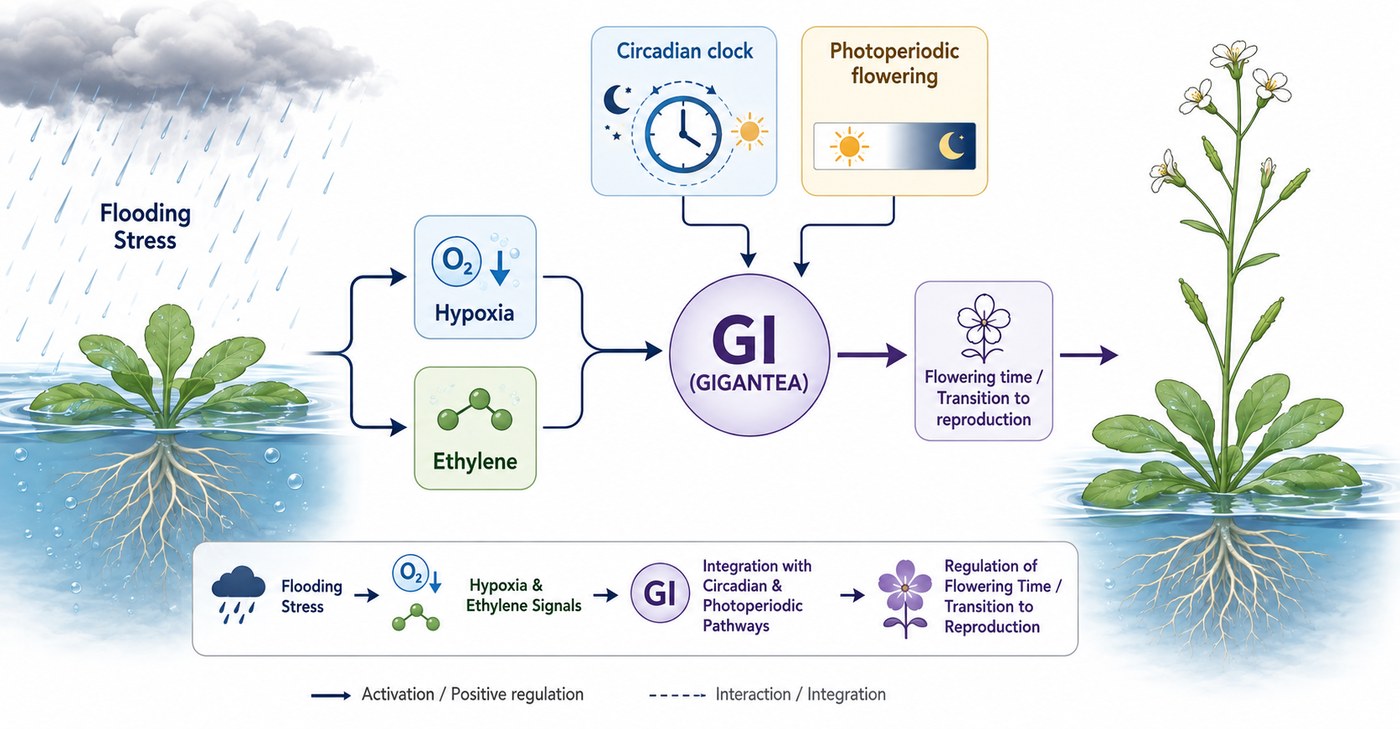
As climate change increases the frequency of extreme environmental stresses such as heavy rainfall and flooding, understanding how plants adapt to these conditions and regulate their survival strategies has become increasingly important. Flooding limits oxygen availability and induces various stress signals, which can affect not only plant growth but also key developmental processes such as flowering.
Our research focuses on GIGANTEA (GI), an important regulator of the circadian clock and photoperiodic flowering in Arabidopsis thaliana, to investigate the relationship between flooding stress and flowering-time regulation. We compare flowering time and growth responses in plants with altered GI function after flooding and analyze changes in the expression of photoperiodic and flowering-related genes associated with GI. Through these approaches, we aim to understand the molecular mechanisms that regulate flowering under flooding stress.
We also investigate how hypoxia- and ethylene-related signals induced by flooding are connected with the GI-centered circadian and flowering regulatory network. By combining molecular and physiological approaches, we seek to determine how GI contributes to the regulation of plant growth and the transition to reproduction under unfavorable environmental conditions.
Ultimately, our research aims to uncover novel connections between environmental stress signaling and flowering regulation and to provide fundamental knowledge for understanding how plants adapt and survive under changing environmental conditions.