Plant Molecular Cell Biology
Plant Stress Lab 식물 스트레스 연구실
We study the molecular and cellular mechanisms that let plants sense their environment, defend themselves, and keep growing under stress.
What we work on
Seven questions, five systems
Seven programs asking how an organism reads its environment and rewrites its own physiology in response.
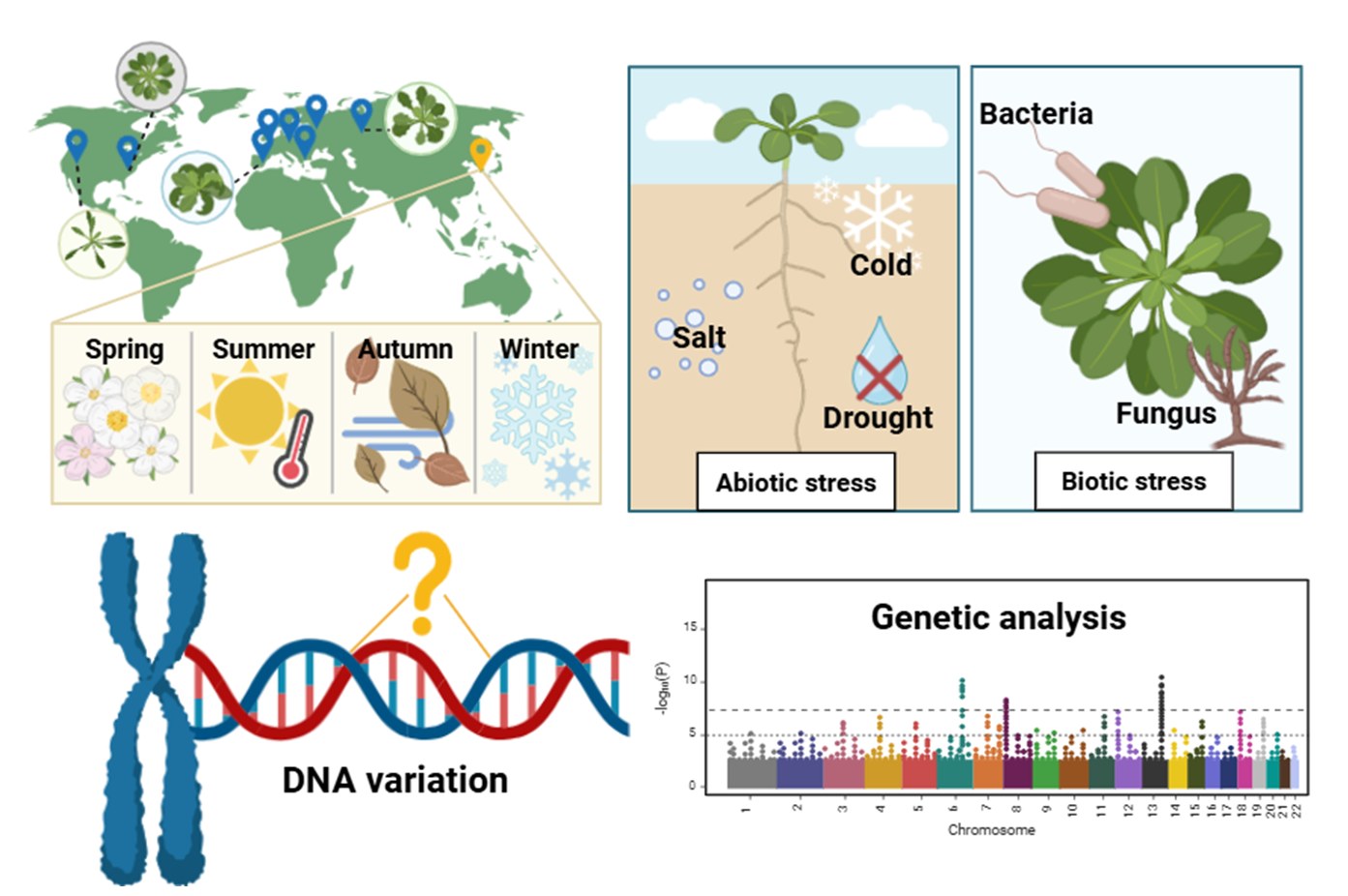
Genetic variation in Korean Arabidopsis thaliana ecotypes
How Korean ecotypes differ in their response to stress, and which genes are behind it.
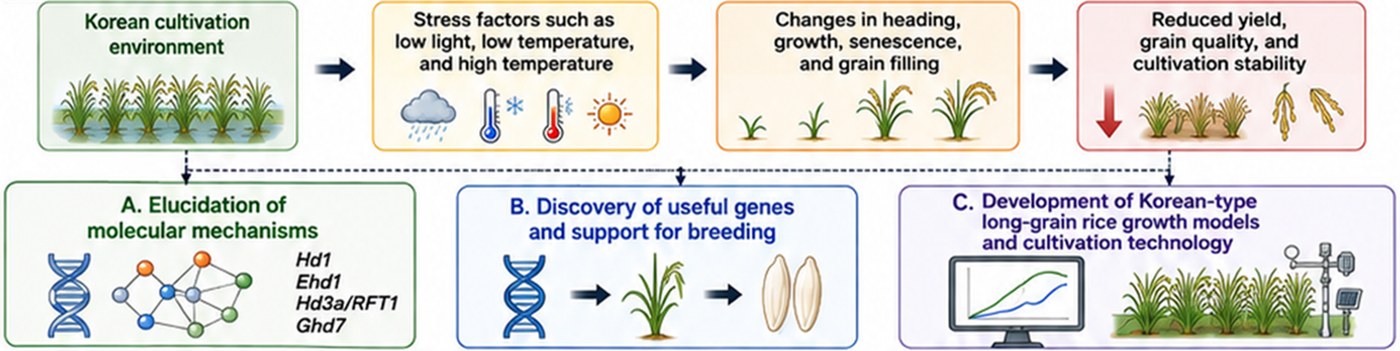
Cultivar-specific responses of rice to a changing environment
Why japonica and indica rice part ways when the light environment changes.
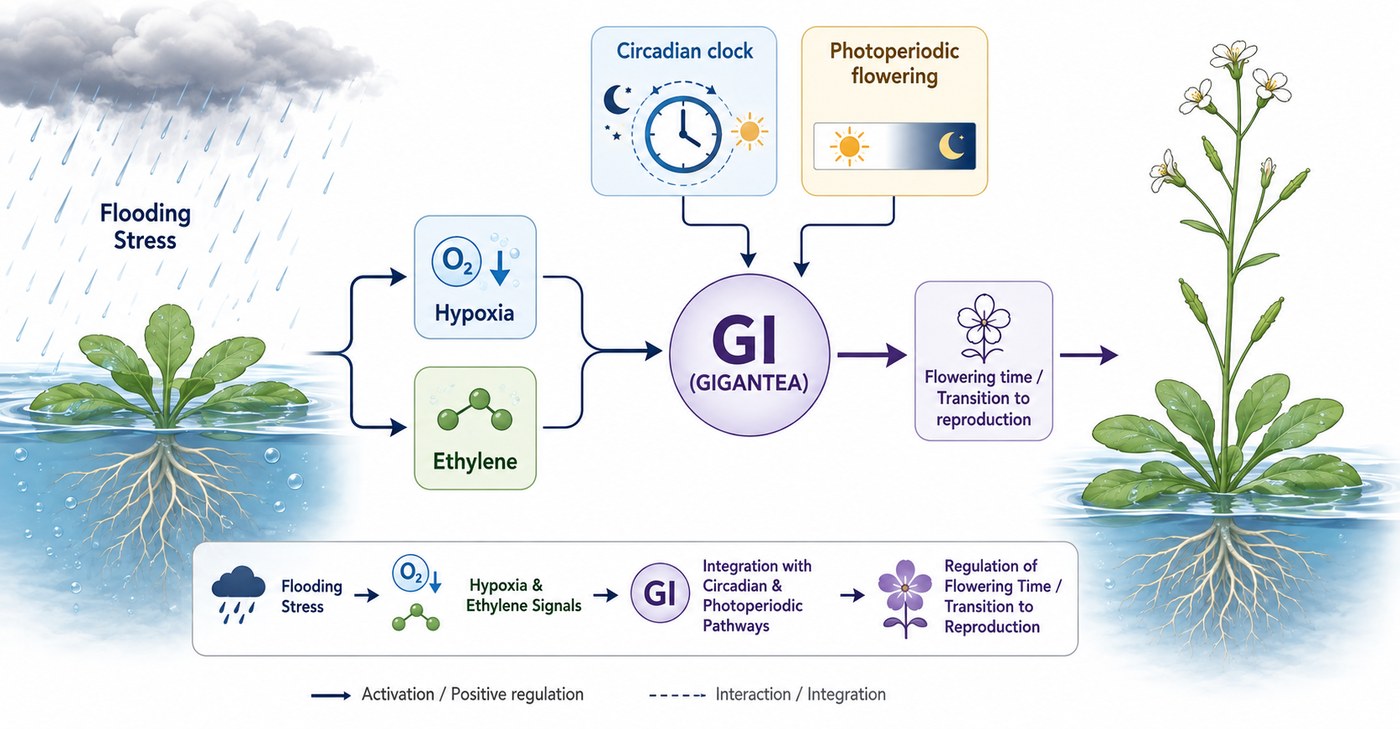
Flowering under flooding stress: the role of GIGANTEA
What the circadian clock does with a flooding signal, and where GIGANTEA comes in.
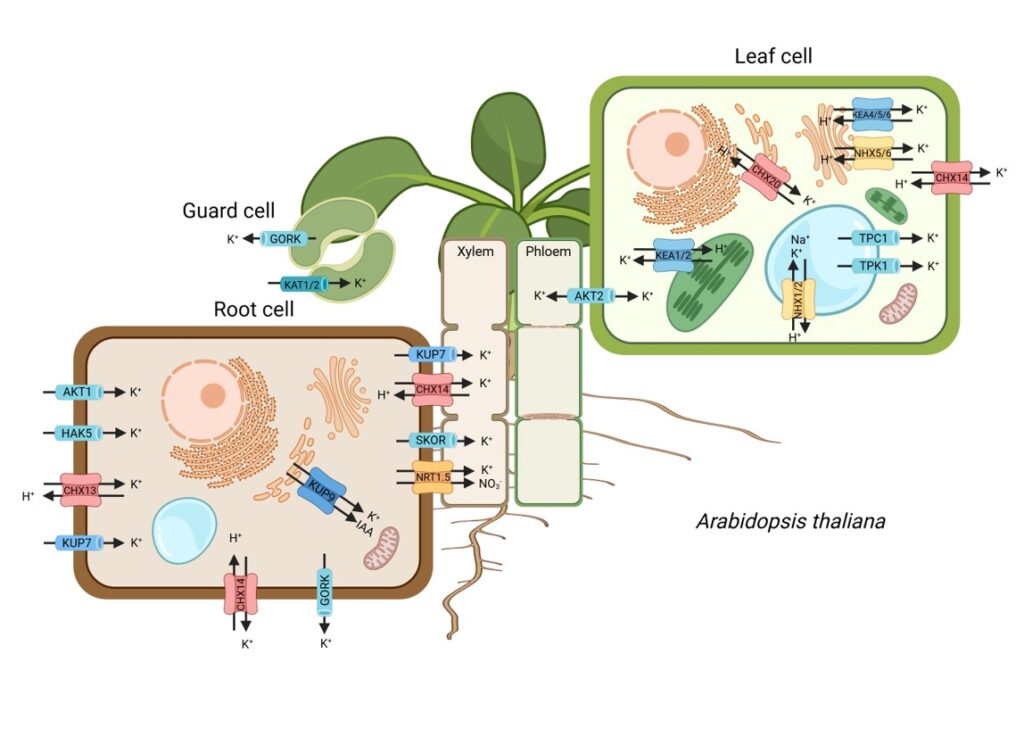
Potassium nutrition and the plant immune response
How K+ transporters shape plant defense, and how pathogens exploit them.
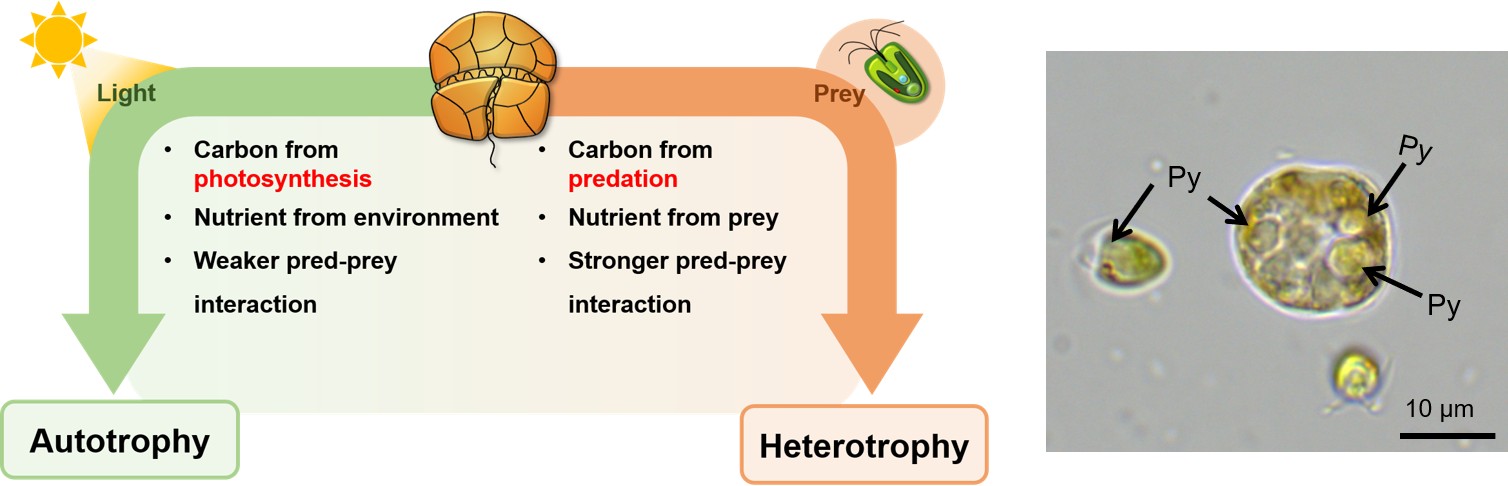
Nutritional flexibility in the dinoflagellate Ansanella
What makes this dinoflagellate switch between autotrophy and heterotrophy.
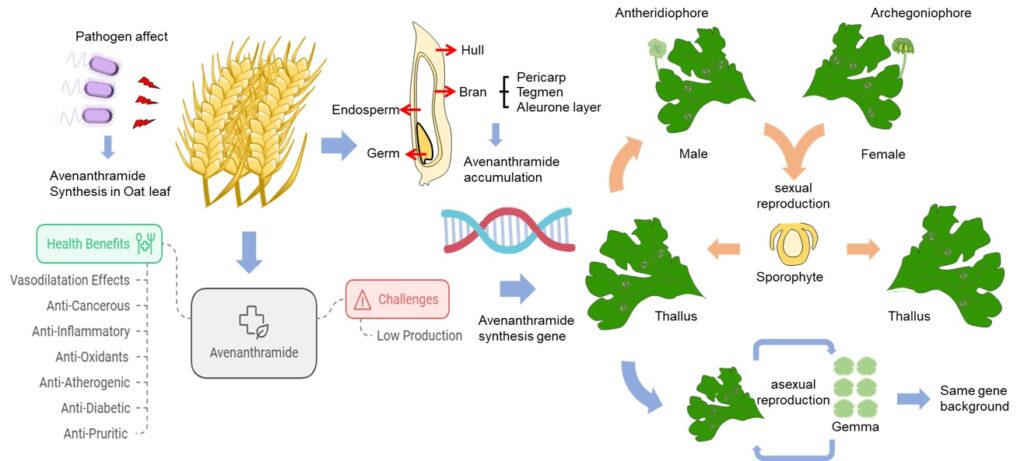
Liverwort as a platform for avenanthramide production
Engineering Marchantia to make an antioxidant oat bran cannot supply at scale.
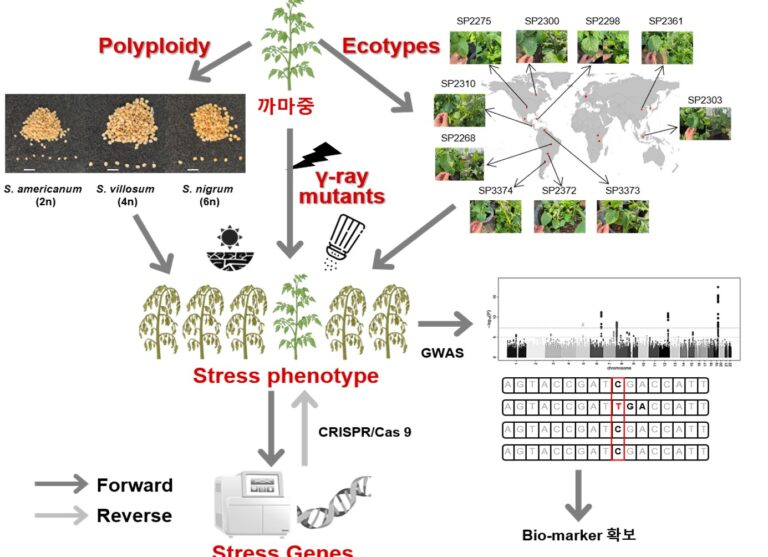
Stress adaptation in black nightshade (Solanum nigrum)
Why a wild crop relative shrugs off salinity and drought.
Lab news
Recent activity
-
Hosted high-school students from across Gwangju for lab visits and a science-club session, and filmed the G-LAMP program video. See photos
-
Rice transplanting day with Prof. Jang Kyu-pil’s group, for the long-grain rice project.
-
Young Woong, Ji Won and Gahyeon graduated — the lab’s first cohort of MSc students.
-
Research visit to Beijing, and talks at the Korean Society of Plant Biologists meeting in Gangneung and the plant pathology meeting in Gyeongju.
-
Young Woong Lee won a best poster award at the Korean Society for Plant Biotechnology meeting in Busan. The lab also moved rooms over the summer.
-
PNAS paper published: inverse regulation of SOS1 and HKT1 localization and stability by SOS3/CBL4 in Arabidopsis. See publications
Our approach
The unseen world of plant perception
We explore the intricate molecular and cellular mechanisms that enable plants to sense and respond to their environment.
How do plants recognize signals, process information, and adapt to changing conditions? How do they defend themselves against pathogens, adjust to environmental stresses, and coordinate growth and development?
Through research in plant molecular cell biology, we seek to uncover the hidden intelligence of plants and contribute to a deeper understanding of life itself. Welcome to our lab, where we unravel the unseen world of plant perception, communication, and adaptation.
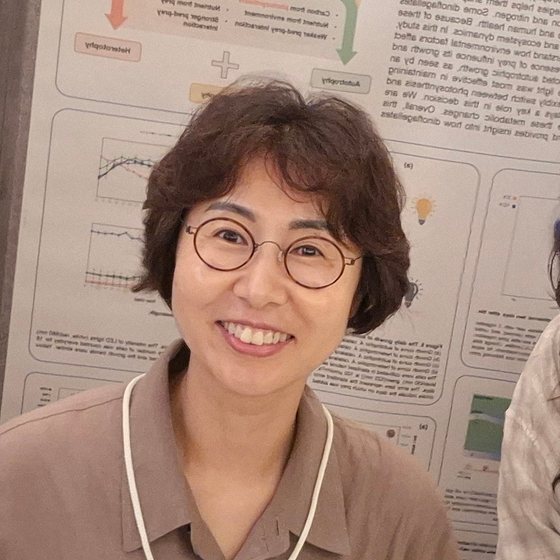
Hee Jin Park 박희진
Principal Investigator
Korea University (BSc, MSc) · Purdue University (PhD)
Gyeongsang National University (Postdoc)
Join us
Curious about plants? Come and ask better questions.
The Park lab welcomes highly motivated biologists who love digging into biological processes in plants — believing that our discoveries offer insight into other organisms too, and that our research can inspire the wider science community.
Prospective students, visiting researchers and collaborators are all welcome to get in touch.
Get in touchFind us
- Address
-
#224, Natural Science Building #1, College of Natural Sciences,
Chonnam National University, 77 Yongbong-ro, Buk-gu,
Gwangju 61186, Republic of Korea - 주소
- 광주광역시 북구 용봉로 77 전남대학교 자연과학대학 1호관 224호
- Contact
- Email addresses and directions →